


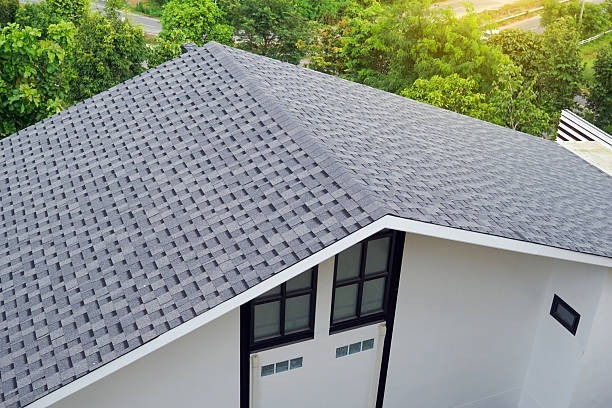
You did everything right. You chose a solid shingle, you kept up with basic maintenance, and yet your roofer is telling you it's showing real wear years before the manufacturer's rated lifespan would suggest. It's a common surprise for homeowners across Raleigh, Durham, Chapel Hill, and the rest of the Triangle, and it's rarely a sign that something was installed wrong. More often, it's the climate.
The Piedmont asks more of a roof than a generic lifespan rating accounts for. Between summer heat, humidity, pollen, storm activity, and heavy tree coverage, roofs across Wake, Durham, Orange, and Chatham counties tend to age faster than homeowners expect, and understanding why helps you plan ahead instead of getting caught off guard.
Here's a look at the local factors accelerating wear on Triangle roofs, and what you can do to protect yours. Pickard's residential roofing team has spent 90+ years learning exactly how Triangle weather wears down a roof, and how to build one that holds up to it.
Why Do Roofs Age Faster in the Triangle?
A handful of regional factors combine to shorten roof life here more than in milder climates:
- Intense summer heat and UV exposure that breaks down shingle materials over time
- High humidity that invites moisture, algae, and premature granule loss
- Heavy pollen and organic debris that trap moisture on the roof surface
- Severe storms and hurricane remnants that stress roofs with wind and hail
- Mature tree coverage that adds shade, moisture, and falling debris in equal measure
None of these factors are unusual for the area. They're simply part of owning a home here, and a roof built and maintained with that in mind will hold up far better than one that wasn't.
Heat and UV Exposure Add Up
Piedmont summers are long, and asphalt shingles absorb a lot of solar energy over a season. Repeated heating and cooling cycles cause materials to expand and contract, which gradually stiffens and cracks the shingle surface. Homes with poor attic ventilation feel this even more, since trapped heat bakes the roof deck from underneath as well as from above. As CertainTeed explains, prolonged summer sun accelerates shingle aging through UV degradation and thermal stress on the roof surface.
This is one of the reasons material choice matters as much as installation quality. A shingle engineered to resist granule loss and thermal stress will simply outperform a generic one in a climate like ours, season after season, whether it's sitting on a newer roof in Apex or a decades-old home near downtown Raleigh.
Humidity and Moisture Are a Year-Round Concern
Unlike drier climates, the Triangle rarely gives a roof a long stretch to fully dry out. Humidity keeps moisture present in shaded valleys, under debris, and around flashing longer than it should be, which creates the conditions for algae streaking, wood rot in older decking, and gradually failing seals. It's slow damage, which is exactly what makes it easy to miss until it's further along.
Homes with steep, deeply shaded rooflines, common in many of the Triangle's older, tree-lined neighborhoods around Chapel Hill and Hillsborough, tend to hold onto this moisture the longest. It's not a reason to worry, but it is a reason to have your roof looked at by someone who knows what sustained humidity does to a roof system over time, not just what storm damage looks like.
Storms and Hurricane Remnants Take Their Toll
The Triangle isn't on the coast, but it still feels the edge of hurricane season most years, along with its share of straight-line wind and hail events across Wake, Durham, Orange, and Chatham counties. Even storms that don't cause obvious damage can loosen shingles, stress flashing, and shorten a roof's remaining service life a little more each time. The National Weather Service's Raleigh office tracks tropical systems that regularly bring damaging wind and heavy rain to the Piedmont well inland of the coast.
That cumulative effect is easy to underestimate. A roof doesn't have to suffer one dramatic storm to age quickly. A handful of ordinary Piedmont summers, each with a few strong thunderstorms rolling through Cary, Apex, or Hillsborough, adds up in exactly the same way.
Not sure how your roof is holding up?
A professional inspection tells you where you actually stand, not just how old your roof is.
Pickard Roofing has spent over 90 years learning how Piedmont weather affects a roof over time. Request a free estimate and we'll give you an honest read on your roof's condition.
Request a Free EstimateTree Coverage Cuts Both Ways
Mature trees are part of what makes so many Triangle neighborhoods beautiful, but they come with a roofing tradeoff. Shade keeps a home cooler, though it also keeps roof surfaces damp longer after rain.
Falling leaves, pollen, and limbs collect in valleys and gutters, holding moisture against the roof and, over time, contributing to premature wear. A gutter system that actually moves debris and water off the roof is one of the simplest ways to offset what tree coverage adds to the equation.
Every Triangle Neighborhood Ages a Roof a Little Differently
Local conditions aren't uniform across the Triangle, and the right roofing approach often depends on where you live:
- In Durham, heavy tree canopy over many older, established neighborhoods means humidity and debris tend to be the bigger long-term concerns.
- In Raleigh, a mix of mature urban canopy and newer construction means roofs see a wider range of aging patterns block to block.
- In Chapel Hill, dense wooded lots keep roofs shaded and slower to dry, which raises the stakes on gutter maintenance and ventilation.
- In Cary and Apex, newer subdivisions with less mature tree cover often see more direct heat and UV exposure instead.
- In Hillsborough, a strong concentration of historic homes means older roofing systems and materials require a more specialized eye during inspection.
What You Can Do About It
None of these factors mean a roof is destined to fail early. They mean the region rewards proactive care:
- Keep gutters and valleys clear of leaves, pollen, and debris
- Schedule a professional inspection after major storms, not just when a problem is visible
- Address small issues, like lifted shingles or worn flashing, before they become bigger ones
- Choose materials and a contractor suited to Piedmont conditions, not a generic national average
A regular maintenance program catches the small, climate-driven issues before they turn into a full replacement, no matter which corner of the Triangle you call home.
Give Your Roof the Advantage It's Up Against
A Triangle roof works harder than most, and it deserves a contractor who understands exactly why, whether that roof sits in a shaded Durham neighborhood, a sun-exposed new build in Cary, or a historic home in Hillsborough.
Knowing what's working against your roof is the first step. Building or maintaining one that's ready for it is the next, and it's where an experienced local roofer makes the real difference. When you're ready for an honest look at where your roof stands, Pickard is here to help.
Serving the Triangle since 1928
Build a roof that's ready for what this climate brings.
With premium materials, expert craftsmanship, and CertainTeed Select ShingleMaster status, Pickard Roofing builds and maintains roofs made for Piedmont weather. Start with a free estimate.
Request a Free Estimate