


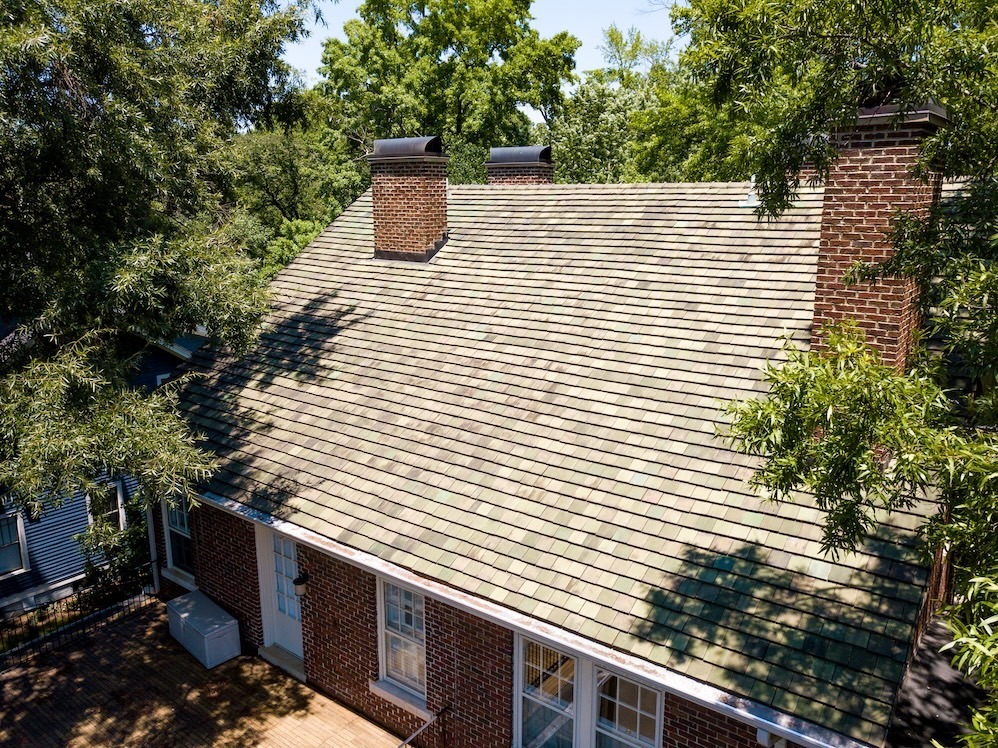
The shade is half the reason you fell in love with the house. Big willow oaks arching over the street in Hayes Barton or Five Points, dappled light on the porch, a yard that stays cooler in July. Then you notice the dark streaks on the north slope of the roof, the gutters that overflow after every storm, and a branch resting a little too close to the ridge.
Tree coverage is one of the most underrated factors in how long a Raleigh roof lasts. The same canopy that gives the City of Oaks its name also drops debris, traps moisture, and feeds the algae and moss that quietly age shingles before their time. The good news is that none of it means losing your trees. It means knowing what to watch and how to manage it. Pickard Roofing has helped Raleigh homeowners protect roofs under the city's heavy oak canopy for over 90 years, and the difference almost always comes down to a few steady habits.
Here's how tree coverage affects roof lifespan in Raleigh, what damage to look for, and the steps that keep a shaded roof healthy for the long haul.
Quick Answer: Does Tree Coverage Shorten the Life of Your Roof?
Yes, heavy tree coverage can shorten a roof's lifespan if it isn't managed. The main ways trees age a roof are:
- Overhanging branches that scrape and abrade shingles in wind
- Leaves, pine straw, and seed pods that clog gutters and trap moisture
- Constant shade that keeps slopes damp and feeds algae, moss, and lichen
- Falling limbs during storms that puncture or crush the roof surface
A shaded roof can still reach its full service life. It simply needs regular cleaning, branch management, and a yearly professional inspection to stay ahead of the moisture problems that trees create.
Why Raleigh's Canopy Is Hard on Roofs
Raleigh earned the nickname City of Oaks for good reason, and many of its most desirable neighborhoods sit under mature hardwoods that are decades older than the houses' current roofs. Streets like Hayes Barton, Five Points, and Historic Oakwood are beautiful precisely because of that canopy, and that same canopy creates a microclimate right at the shingle line.
Slopes that never get direct sun stay damp long after a rain, and damp plus warmth plus North Carolina humidity is the exact recipe organic growth loves. The result shows up first as dark streaks, usually on the north-facing side, then as raised, spongy patches where moss has taken hold. According to GAF, those dark streaks are usually blue-green algae, a cyanobacteria that spreads on damp, shaded slopes and can lead to granule loss over time. Moss is the bigger concern of the two, because it holds water against the shingle and lifts the edges, giving moisture a path underneath. Left alone, what starts as a curb-appeal issue slowly becomes a durability one.
Overhanging Branches and Storm Limbs
A branch that rests on or sweeps across the roof acts like sandpaper every time the wind blows. Over months and years, that motion wears away the protective mineral granules that shield shingles from UV and give them their rated lifespan. Once the granules thin, the asphalt underneath ages faster, and a roof that should have lasted decades starts showing wear early.
The bigger risk arrives with severe weather. The Triangle sees strong thunderstorms through spring and summer and the remnants of tropical systems moving up from the coast in late summer and fall. A heavy limb coming down in those conditions can puncture the deck or take out a section of gutter in seconds, turning a manageable maintenance item into an emergency repair. The National Roofing Contractors Association advises homeowners to keep overhanging branches trimmed back and gutters clear of leaves and debris, and branches within several feet of the roof are worth addressing before storm season, not after.
Debris, Gutters, and Trapped Water
Acorns, oak tassels in spring, pine straw, and leaves in fall all pile into valleys and gutters throughout the year. When drainage clogs, water backs up under shingle edges and against flashing instead of flowing off the roof. That standing moisture is what turns a small vulnerability into a leak, and over time it rots fascia, soffits, and the roof deck itself.
On a heavily treed Raleigh lot, gutters are not a minor accessory. A custom gutter system sized to move tree debris and stormwater off the roof before it can do damage, paired with regular cleaning, does more to extend a roof's life than almost any other single step. In fact, keeping gutters clear through pollen and leaf season is one of the simplest ways to protect a roof under heavy trees. The point is to move water and debris off the roof quickly, before either can sit and do damage.
Protect your investment
A roof under the canopy needs an expert eye.
Pickard Roofing has cared for Raleigh's shaded, tree-lined neighborhoods for 90+ years. Request a free estimate and we'll assess how your tree coverage is affecting your roof and what it needs.
Request a Free EstimateHow to Keep a Shaded Roof Healthy
You don't have to choose between your trees and your roof. The work is steady and manageable, and most of it keeps you safely on the ground. From the yard, watch for streaking that's spreading year over year, granules collecting in the gutters and at the base of downspouts, and branches creeping back toward the roofline after a growing season.
From there, the plan is simple. Schedule tree trimming to keep limbs clear of the surface, and revisit it every couple of years as the canopy fills back in. Keep gutters and valleys clean through both pollen season in spring and leaf drop in fall. Have a professional inspect the roof once a year so small issues are caught while they are still small. And when it's eventually time for a new roof, algae-resistant shingles, which use copper-infused granules to discourage growth, are worth specifying on a shaded home. A maintenance program keeps trimming, cleaning, and inspection on a schedule so nothing slips through the cracks.
One caution worth repeating: leave the climbing and the cleaning at height to professionals. A damp, shaded, possibly mossy slope is one of the slickest surfaces on your property, and a fall is far costlier than a service visit. Ground-level observation tells you when to call. It should never turn into a trip up the ladder.
Keep Your Roof and Your Oaks
Raleigh's tree canopy is part of what makes living here special, and with the right care your roof can thrive beneath it for decades. When you want an honest assessment of how your trees are affecting your roof, and a clear plan to protect both, Pickard is ready to help.
Serving the Triangle since 1928
A roof built to last beneath Raleigh's oaks.
With premium materials, expert craftsmanship, and CertainTeed Select ShingleMaster status, Pickard Roofing keeps shaded Raleigh roofs sound for the long haul. Start with a free estimate.
Request a Free Estimate